

In high-volume commercial kitchens, every second saved during prep and line assembly directly impacts table turnover, ticket times, and overall customer satisfaction. When line cooks are forced to leave their prep stations to retrieve chilled ingredients from distant walk-in coolers, bottlenecking inevitably occurs—slowing down ticket execution during peak service hours.
Kitchen layout design is fundamental to labor efficiency. By strategically integrating refrigerated prep stations directly into cook lines, operators can build smooth, ergonomic workflows that minimize foot traffic and maximize culinary output.
Eliminating Unnecessary Steps on the Line
Kitchen ergonomics focus on creating short, intuitive movement pathways for line cooks. The ideal kitchen design organizes stations sequentially: raw cold storage, ingredient preparation, thermal cooking, and final plate staging.
When line cooks have chilled toppings, sauces, and raw proteins within arm’s reach, ticket completion times drop significantly. Modern commercial kitchens rely heavily on specialized refrigerated prep tables with pan rails. These units combine an accessible top work surface and integrated pan rails with cold refrigerated storage underneath, allowing cooks to slice, portion, and assemble dishes seamlessly without breaking their station rhythm.
Key Features of High-Performance Prep Stations
To handle the rigorous environment of commercial cooking, prep tables and cold stations must meet demanding operational criteria:
- Forced-Air Air Curtain Technology: Keeps ingredients held in top pan rails below 41°F, even when pan covers are kept open during busy meal periods.
- Heavy-Gauge Stainless Steel Construction: High-grade stainless steel tops withstand heavy chopping, food processors, and continuous commercial sanitizing.
- Heavy-Duty Swivel Casters: Allows staff to easily roll equipment away from walls for nightly sweeping, mopping, and preventative maintenance behind the hot line.
Balancing Space Footprint with Storage Capacity
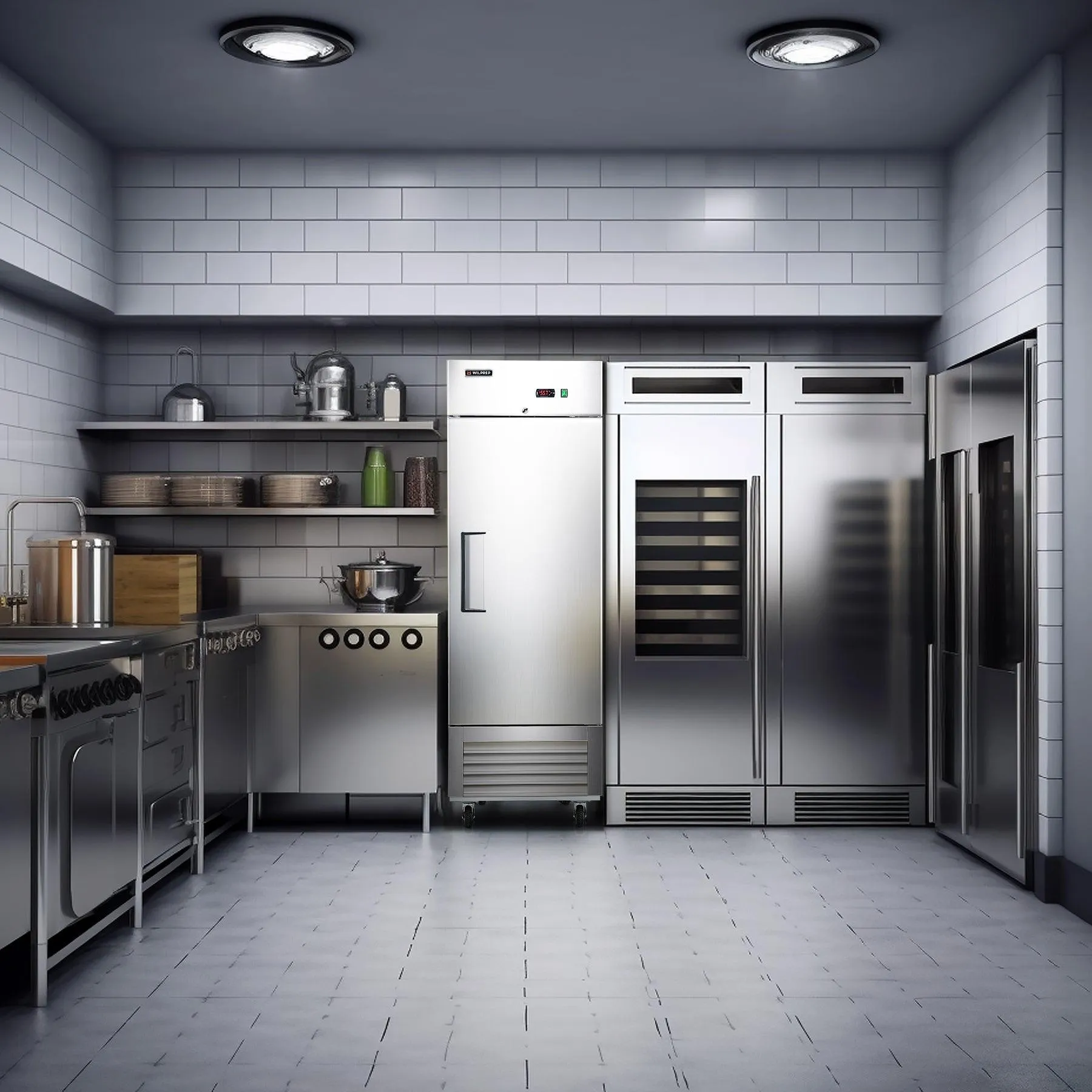
Floor space in commercial kitchens comes at a premium. Choosing compact multi-functional refrigeration solutions provides maximum storage volume without overwhelming main aisle walkways. For small-footprint venues like ghost kitchens, food trucks, or cafes, selecting multi-door prep units provides dual-zone convenience in a single footprint.
By investing in thoughtfully engineered commercial kitchen equipment solutions, restaurant owners reduce staff fatigue, lower food waste through precise temperature maintenance, and position their kitchen line for high-capacity daily output.